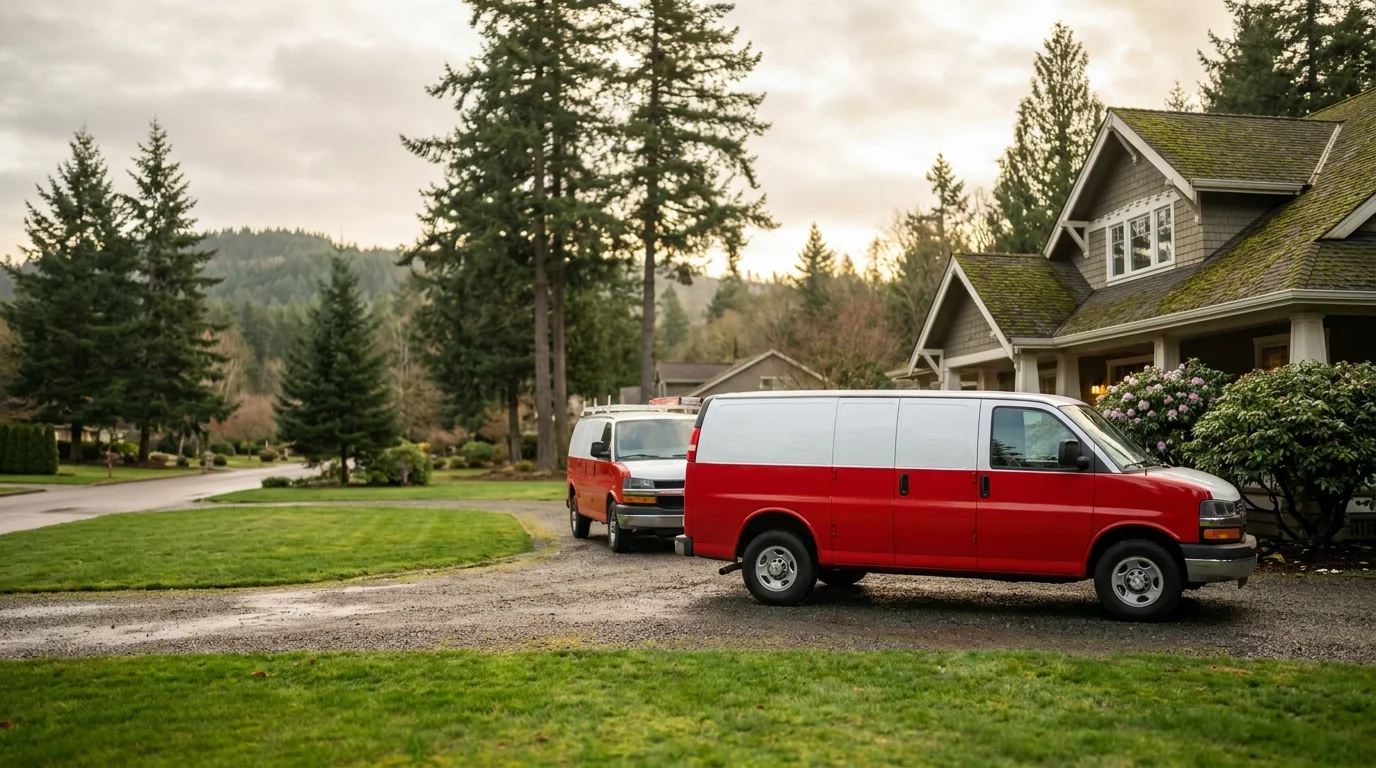
24/7 Emergency Water Damage Restoration in Ashland
24/7 emergency water damage restoration in Ashland and surrounding areas. IICRC-certified, insurance billing accepted. Call (541) 821-3664.
Water damage emergency in Ashland? Call (541) 821-3664 now. We answer 24/7 and send a crew to start extraction before the water finds its way into subfloor, framing, and insulation.
A pipe lets go behind a washing machine, a water heater splits at the seam, or a roof leak finally works its way through the ceiling drywall after a week of rain. Within hours, carpet pad is saturated, baseboards wick moisture up the wall, and the air starts carrying that flat, damp-cardboard smell that tells you drywall and framing are holding water they were never built to hold. This is the point where water removal, structural drying, and moisture monitoring stop being optional and start being the difference between a repair and a renovation.
What Water Damage Restoration actually involves
Water damage restoration is the sequence of extraction, drying, and monitoring that pulls a structure back to a stable moisture content before mold, rot, or warping set in. The work starts with pumps and truck-mounted or portable extraction units pulling standing water off floors, out of carpet, and out of any cavity where it’s pooled. From there, the job shifts to structural drying: axial air movers positioned to push air across wet surfaces, and low-grain refrigerant or desiccant dehumidifiers pulling moisture out of the air so materials can actually release it. Depending on the source, this can take anywhere from a few days to over a week, and it’s tracked daily with moisture meters and thermal imaging, not guessed at by eye. Category 2 water (washing machine overflow, dishwasher discharge) and Category 3 water (sewage backup, floodwater) require containment and different handling than a clean supply-line break, because the contamination risk changes what has to be removed versus dried in place.
Our process
- Water extraction. We remove standing water first, using pumps or extraction equipment matched to the volume and depth of water on site. Every minute water sits on flooring or inside a wall cavity adds to what has to be dried or removed later.
- Moisture mapping. Before any equipment goes in for drying, we use moisture meters and thermal imaging to find where water traveled, including behind baseboards, under flooring, and inside wall cavities that look dry at the surface.
- Structural drying. Air movers and dehumidifiers are set based on the moisture map, not a standard room count, so wet framing and subfloor actually dry instead of just drying the top layer.
- Containment for Category 2 or 3 water. When the source is contaminated, we isolate the affected area to keep the loss from spreading and handle removal of unsalvageable materials separately from the drying zone.
- Moisture monitoring and sign-off. We track readings daily until materials reach a dry standard, then document the final numbers, which is what closes out the claim with most carriers.
What separates a good water damage response from a bad one
The most common mistake is drying what’s visible and skipping what isn’t. A wall can read dry on a moisture meter at the drywall surface while the stud behind it, or the sill plate underneath, is still saturated. Equipment that gets removed too early because the room “feels dry” is the single biggest reason mold shows up two or three weeks after a water loss looked resolved. A thorough response pulls baseboards and sometimes drills small inspection holes in drywall to check cavities directly, rather than relying on surface readings alone.
Insurance adjusters look for daily moisture logs, photos of the affected areas before and after extraction, and documentation of the drying equipment used, not just a final “all dry” statement. A written scope and a clear moisture-tracking record are what support the claim; vague invoices are what get claims questioned.
What does water damage restoration cost?
Costs vary by how much water intruded, what category it falls under, how long it sat before extraction started, and how many building materials have to be removed versus dried in place. These are typical industry ranges, not a quote: Swept Away Restoration provides a written scope of work after inspecting the loss, before any work begins. Homeowners insurance typically covers sudden and accidental water damage, such as a burst pipe or failed appliance, but usually excludes damage from long-term neglect or gradual leaks.
| Scenario | Typical range |
|---|---|
| Single room, clean water, caught early | $1,200 - $3,500 |
| Multi-room water intrusion, clean source | $3,500 - $8,000 |
| Category 2 water with contamination | $5,000 - $12,000 |
| Category 3 water requiring material removal | $8,000 - $25,000+ |
| Hardwood or subfloor replacement after extended saturation | $3,000 - $10,000 |
Seasonal & regional considerations
Ashland’s winters bring freeze-thaw swings that crack supply lines and split exposed pipes in crawlspaces and older homes without insulated plumbing runs. Many homes in the Rogue Valley were built before current insulation standards, which means pipes in unheated spaces are more exposed than code would allow today. Spring snowmelt and sustained rain events also push groundwater and roof drainage systems harder, which is when slow leaks in older flashing or foundation cracks tend to show up as water damage weeks after the actual weather event.
Service area
We respond to water damage calls throughout Ashland and the surrounding Rogue Valley, including Medford, Talent, Phoenix, and Jacksonville.
If water is actively spreading through your home right now, stop it at the source if you safely can, then call (541) 821-3664 to schedule your moisture assessment. The sooner extraction starts, the fewer materials end up needing replacement instead of drying.
Frequently Asked Questions
Does homeowners insurance cover water damage restoration?
How long does structural drying typically take?
What's the difference between Category 1, 2, and 3 water?
Can carpet and drywall be saved after a water leak, or do they need to be replaced?
What should I do while waiting for a water damage crew to arrive?
Looking for the best water damage restoration company in Ashland?
Swept Away Restoration provides licensed and insured water damage restoration in Ashland, OR and the surrounding area, and has served local property owners since 2018. We answer calls 24/7 — call (541) 821-3664 for immediate help.
Need Water Damage Restoration now?
We respond 24/7 across Ashland and surrounding OR cities.
Related Coverage
- Our Restoration Services
- Contact Swept Away Restoration
- 24/7 Emergency Water Removal & Cleanup in Ashland
- 24/7 Emergency Water Cleanup in Ashland
- Burst Pipe Emergency Checklist: Step-by-Step Response
- What To Do in the First 24 Hours After Water Damage
- How To Choose a Restoration Company in Ashland (Without Getting Burned)