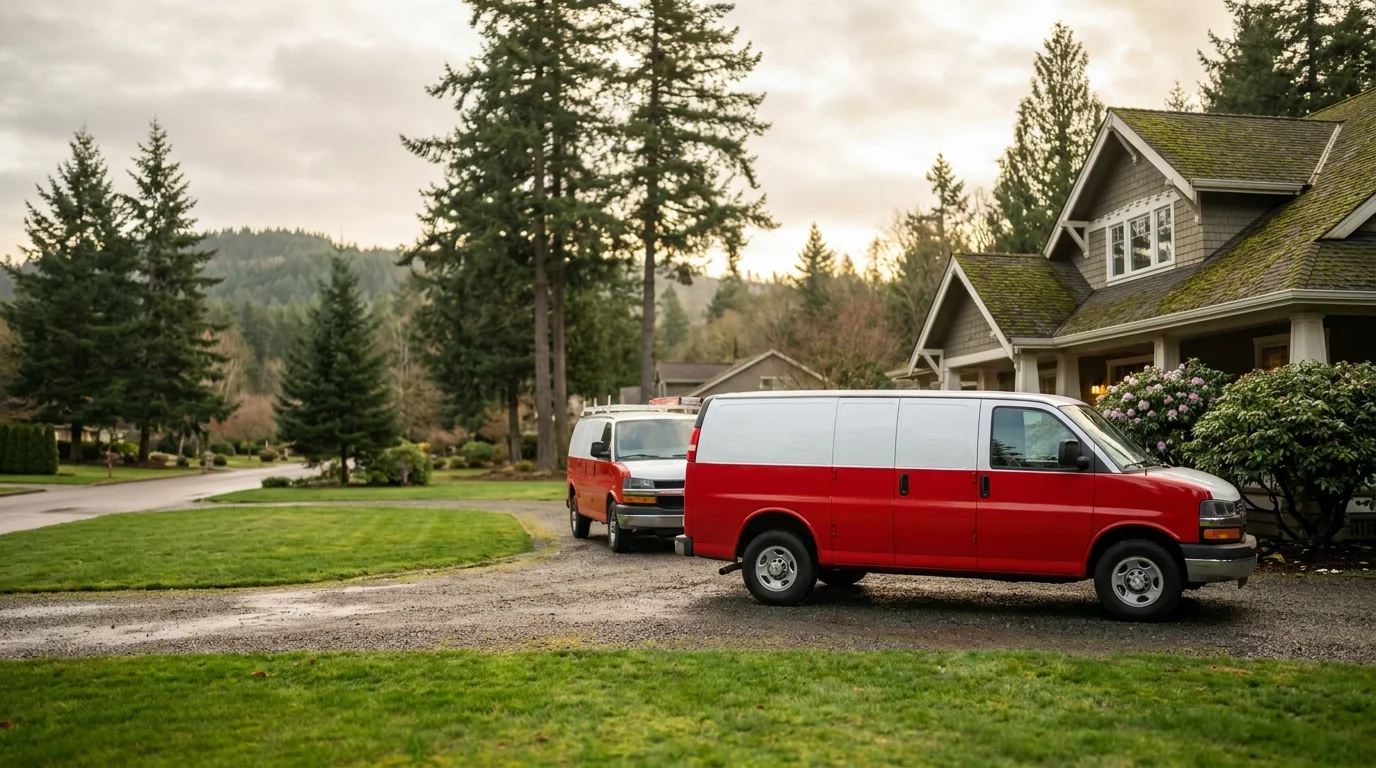
24/7 Emergency Smoke Damage Restoration in Ashland
24/7 emergency smoke damage restoration in Ashland and surrounding areas. IICRC-certified, insurance billing accepted. Call (541) 821-3664.
Smoke damage emergency in Ashland? Call (541) 821-3664 now. We answer 24/7 and bring air scrubbers and odor-neutralizing equipment to stop smoke residue from etching into surfaces while you wait.
Smoke behaves differently than the fire that caused it. A kitchen flare-up or a wildfire smoke event miles away can leave a house structurally untouched but saturated with an acidic residue that keeps working on drywall, cabinetry, and HVAC components for days after the air clears. The smell that seems to fade by evening often returns stronger once humidity rises, because soot particles are hygroscopic and reactivate with moisture. The longer that residue sits, the more it etches into finishes, yellows grout and caulk, and drives odor deep into porous materials like drywall and carpet pad.
What Smoke Damage Restoration actually involves
Real smoke damage restoration starts with identifying what kind of smoke you’re dealing with, because dry wildfire smoke, wet smoke from a smoldering fire, and protein smoke from a kitchen incident each respond to different cleaning agents and require different equipment. A technician walks the property testing surfaces, checking inside cabinets and behind outlet covers, and inspecting the HVAC system, since ducts recirculate soot through every room long after the visible fire is out. From there the work includes HEPA vacuuming, dry sponge cleaning on porous surfaces, wet cleaning on washable materials, thermal fogging or ozone treatment in sealed rooms to neutralize odor at a molecular level, and content cleaning for anything salvageable. Timelines range from a few days for a contained kitchen event to several weeks for whole-house wildfire smoke infiltration, particularly when ductwork and insulation need attention.
Our process
- Smoke and soot characterization. We identify whether residue is dry, wet, or protein-based, since this determines cleaning chemistry and sequence. Misreading this step is the most common reason DIY cleaning makes odor worse instead of better.
- Pre-cleaning and HEPA vacuuming. Loose soot gets removed before any wet cleaning touches a surface, because introducing moisture to dry soot smears it into fabric and finishes instead of lifting it.
- Surface and content cleaning. Washable surfaces get wet-cleaned with the appropriate agent; porous materials like drywall and some fabrics get dry sponge treatment or, where damage is too deep, removal.
- Odor neutralization. Thermal fogging or ozone treatment in contained spaces reaches into the same microscopic cracks and fibers the smoke penetrated, addressing odor at the source rather than masking it.
- HVAC and duct check. Where smoke has circulated through the system, we flag duct cleaning needs and filter replacement so odor doesn’t re-enter the air once the home is closed back up.
What separates a good smoke damage response from a bad one
The most common mistake is treating smoke damage like a surface cleaning job. Wiping down walls and running an air freshener addresses what you can see, not the residue that’s worked into porous materials and duct lining. A thorough response tests multiple surfaces and materials before choosing a cleaning method, because protein soot from a stovetop fire needs an entirely different approach than dry wildfire ash tracked in through open windows.
Adjusters evaluating a smoke claim look for documented pre- and post-cleaning readings, a clear scope that separates cleanable items from items requiring replacement, and evidence that HVAC systems were inspected rather than ignored. Skipping the duct check is a frequent gap: a home can look and smell clean for a week and then the furnace kicks on and redistributes residual soot through every vent. Another overlooked detail is sealed cavities, soot migrates into wall voids and under baseboards through pressure differentials during the fire, and a response that only treats visible surfaces leaves a slow-building odor problem behind.
What does Smoke Damage Restoration cost?
Costs vary widely depending on how far smoke traveled, whether it was wet or dry, and whether ductwork and contents are affected. These figures reflect typical industry ranges, not a quote, since every loss is different and Swept Away Restoration provides a written scope of work before any cleaning begins. Homeowners insurance typically covers smoke damage restoration when the fire or smoke event is a covered peril, though coverage for HVAC cleaning and contents varies by policy.
| Scenario | Typical range |
|---|---|
| Single room, light surface smoke | $500 - $1,800 |
| Whole-house wildfire smoke infiltration | $3,000 - $8,000 |
| Kitchen fire with protein soot spread | $1,500 - $4,500 |
| HVAC and duct smoke remediation | $450 - $2,000 |
| Odor treatment with thermal fogging/ozone | $300 - $1,200 |
Seasonal & regional considerations
Ashland sits close enough to the Rogue Valley’s wildfire corridor that smoke infiltration from regional fires is a recurring concern independent of any fire on the property itself. Homes with older, leakier window seals and attic ventilation common in the area’s older housing stock tend to pull in more ambient smoke during active fire season, which means whole-house odor treatment comes up more often here than in newer, tightly sealed construction. Inversion layers that settle smoke into the valley can also extend exposure time well past when a fire itself is contained.
Service area
Swept Away Restoration handles smoke damage restoration in Ashland and nearby communities throughout the Rogue Valley, including Medford, Talent, and Phoenix.
If your home still smells like smoke days after a fire or a wildfire smoke event, that odor is a sign residue is still active in your walls, ducts, or belongings. Call (541) 821-3664 to begin smoke and soot removal before it etches further into your home’s surfaces.
Frequently Asked Questions
Does homeowners insurance cover smoke damage restoration?
Why does my house still smell like smoke after I've cleaned the visible soot?
What's the difference between wet smoke and dry smoke, and why does it matter?
Can smoke damage affect a home even if the fire happened somewhere else?
Do I need to replace smoke-damaged items, or can they be cleaned?
Looking for the best smoke damage restoration company in Ashland?
Swept Away Restoration provides licensed and insured smoke damage restoration in Ashland, OR and the surrounding area, and has served local property owners since 2018. We answer calls 24/7 — call (541) 821-3664 for immediate help.
Need Smoke Damage Restoration now?
We respond 24/7 across Ashland and surrounding OR cities.